
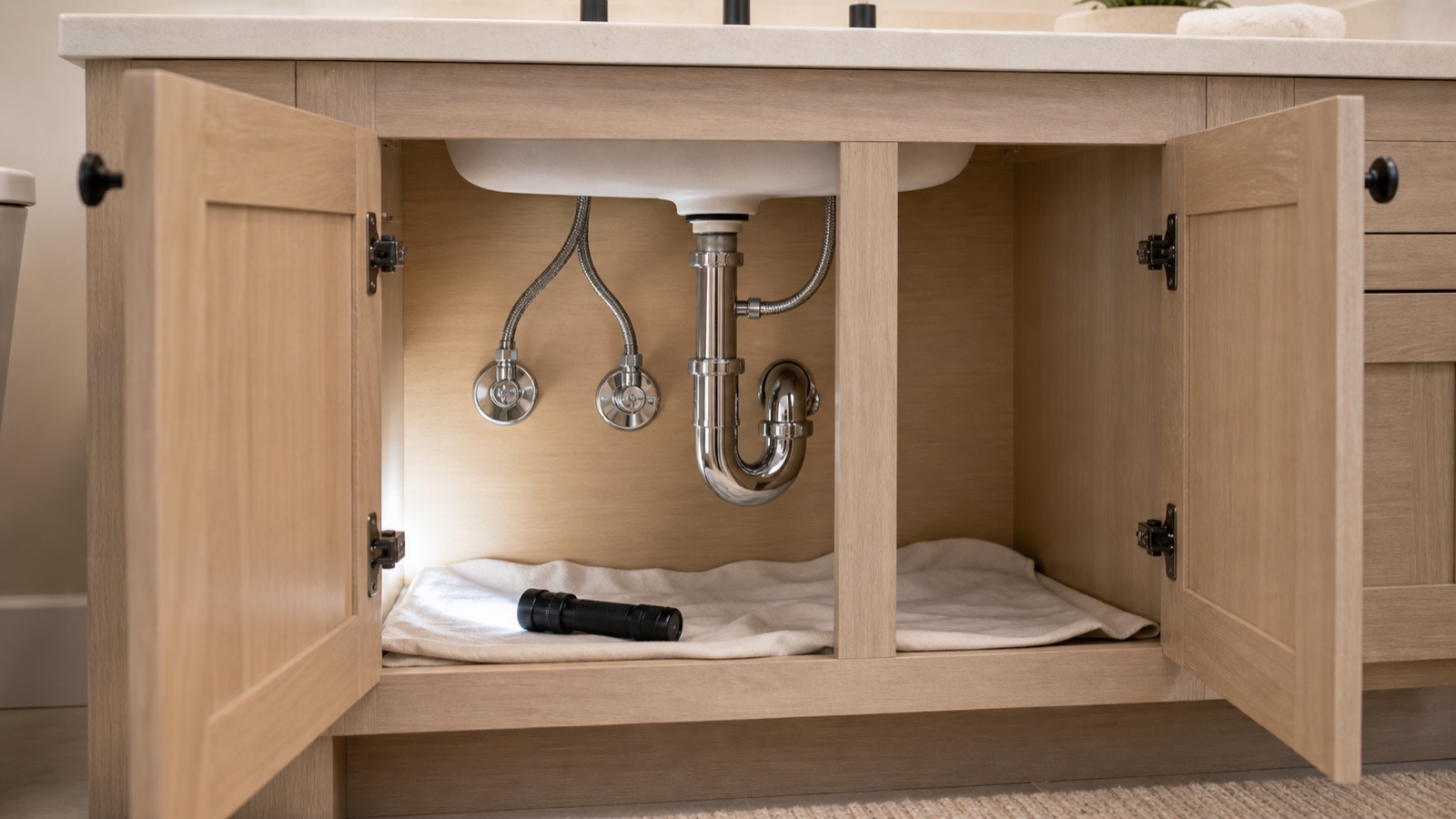
Bathroom shutoff valves are small parts, but they can have a big effect on a remodel. If an old angle stop does not close, leaks at the stem, has corrosion, or is paired with tired supply lines, it can delay fixture work and increase the risk of water problems during construction.
Many homeowners focus on tile, vanity, mirrors, faucets, and lighting. Those choices matter, but the plumbing connections behind and below the finishes matter too. Replacing weak shutoffs before a remodel is often a practical upgrade because access is easier before the new vanity, tile, or fixtures are complete.
This guide explains when bathroom shutoff valves should be replaced, what to check before remodeling, and how this work fits into a larger bathroom remodel or standalone plumbing service.
What bathroom shutoff valves do
Shutoff valves, often called angle stops under a sink or behind a toilet, let you isolate a fixture without turning off water to the whole home. A good shutoff valve makes future faucet, toilet, vanity, or supply line work safer and faster.
In a bathroom, you may have shutoffs for:
- Hot and cold water under the vanity sink
- The toilet supply line
- Fixture branches connected to a shower or tub valve
- Access panels or nearby branch lines in older layouts
When shutoffs work well, repairs are easier. When they fail, a small fixture swap can require shutting off water to a larger section of the home or stopping work until the valve is repaired.
Signs a shutoff valve should be replaced
Some valves look fine from a distance but show problems when operated. During a remodel review, the most important question is not only whether a valve exists. It is whether the valve closes fully and safely.
Replace or inspect closely if you notice:
- The handle is stuck, loose, missing, or hard to turn.
- Water drips from the valve body, stem, or connection point.
- There is corrosion, mineral buildup, or green staining.
- The valve only partially shuts water off.
- The supply line is old, kinked, brittle, or not braided stainless.
- The valve is buried behind cabinetry or difficult to access.
- The toilet or faucet is being replaced anyway.
If a shutoff has not been touched in years, it may fail the first time someone tries to close it. That is why testing and replacement planning should happen before the remodel schedule depends on it.
Why this matters before vanity replacement
Vanity replacement is one of the most common times to discover valve problems. The old vanity comes out, the new vanity needs different access, and the existing shutoffs may be too low, too high, too far forward, corroded, or simply unreliable.
If the new vanity has drawers, a floating design, a different back panel, or a wider sink layout, the plumbing rough-in may need adjustment. This is the right time to review shutoff placement, drain alignment, trap clearance, supply line length, escutcheons, and access.
Trying to keep old valves just to save a small part of the budget can be a false economy if they leak after the new cabinetry is installed.
Why this matters before tile and flooring
Tile and flooring create finished surfaces that should not be disturbed after installation. If a toilet shutoff leaks, a flange needs attention, or a water connection is weak, it is better to address it before the new finish floor is complete.
For bathrooms with tile floors, tub surrounds, shower walls, or backsplash work, sequencing is important. Plumbing rough-in and valve access should be reviewed before closing walls, setting tile, or installing trim.
For more tile-specific planning, see our tile and backsplash service page.
Supply lines should be checked too
The shutoff valve is only part of the connection. Flexible supply lines, compression fittings, gaskets, washers, and fixture connections also deserve attention. Old or stressed supply lines can leak even when the valve itself is acceptable.
Braided stainless supply lines are common replacements for many sink and toilet connections, but compatibility still matters. Length, connection type, bend radius, and fixture requirements should all be checked.
Before a bathroom remodel starts, every visible water connection should have a simple job: close, open, connect, and test without drama.
Do not ignore the toilet shutoff
Toilet shutoffs are easy to overlook because they sit low and often remain untouched. During a remodel, the toilet may be removed for flooring, painting, tile, toilet replacement, flange work, or access. That makes it a logical time to inspect the shutoff and supply line.
If the toilet valve does not close fully, the crew may need to shut off water elsewhere before removing the toilet. If the valve leaks after movement, it can affect the new floor and trim. Replacing a weak toilet shutoff during the project can prevent a small part from becoming a larger problem later.
What a plumber should verify
A practical inspection does not need to be complicated. Before or during the estimate, the plumbing review should answer a few direct questions:
- Do the hot and cold sink shutoffs close fully?
- Does the toilet shutoff close without dripping?
- Are supply lines in good condition and correctly sized?
- Are drains, P-traps, tailpieces, and seals aligned and serviceable?
- Will new vanity drawers or shelves conflict with plumbing?
- Are there signs of past leaks under the sink or around the toilet?
- Will any walls, tile, or flooring be closed before plumbing is tested?
After replacement, the work should be tested. Valves should open and close. Fixtures should run. Visible connections should be checked for leaks. The area should be cleaned before finishes are complete.
When replacement is usually worth it
Replacing shutoff valves is often worth considering when the bathroom is already being opened up, the vanity is being removed, the toilet is being reset, or the existing valves are clearly old. It can also make sense when homeowners plan to stay in the home and want more serviceable plumbing.
It is especially worth discussing if:
- The home has older plumbing connections.
- The bathroom has had leaks before.
- The new vanity or toilet changes access.
- You are investing in new tile or flooring.
- You want future fixture repairs to be easier.
For a small bathroom refresh, valve replacement may be a simple add-on. For a full remodel, it should be part of the plumbing review.
How this fits into a remodel estimate
A good estimate should separate visible finish work from plumbing risk. If shutoffs and supply lines need replacement, the scope should say so. If existing conditions are uncertain until demolition, the estimate should explain what might change after access improves.
Get Renovation LLLP reviews plumbing integration as part of bathroom remodeling because the finished room depends on what happens behind the finishes. Our goal is not just a clean final photo. It is a bathroom that works reliably after the work is complete.
Need bathroom plumbing checked before remodeling?
If you are planning a bathroom remodel in Seattle, Everett, Bellevue, Kirkland, Redmond, Bothell, Lynnwood, Shoreline, Edmonds, or nearby areas, take a few clear photos under the sink, behind the toilet, and around the fixtures. Include them with your free quote request so we can review the plumbing along with the finishes.
You can also contact Get Renovation if you need plumbing repair, fixture replacement, or shutoff valve work before a larger remodel starts.
Ready to Transform Your Bathroom?
Get a free estimate from our experts in the Seattle area.
Get a Free Quote Contact Us
