Plumbing is one of the easiest parts of a bathroom remodel to underestimate. A new vanity, shower, toilet, or tub can look like a finish upgrade, but each choice may affect shutoffs, supply lines, valves, drains, traps, access, and testing.
This guide explains what to coordinate before walls close and tile begins. It is written for homeowners planning a remodel, but the same checks can help with focused plumbing repairs.
Bring plumbing into the plan early
Plumbing decisions should happen before demolition is complete and well before finish surfaces are installed. Waiting until tile, drywall, or cabinets are in place can limit options and make changes more expensive.
- Confirm whether fixtures stay in the same location or move.
- Review the age and condition of shutoff valves.
- Check if a new vanity changes supply and drain alignment.
- Decide whether shower valves or trim should be updated.
- Confirm toilet flange condition and finished floor height.
Even when the layout stays the same, new fixtures can expose old parts that are no longer worth reusing.
Shutoffs and supply lines are worth checking
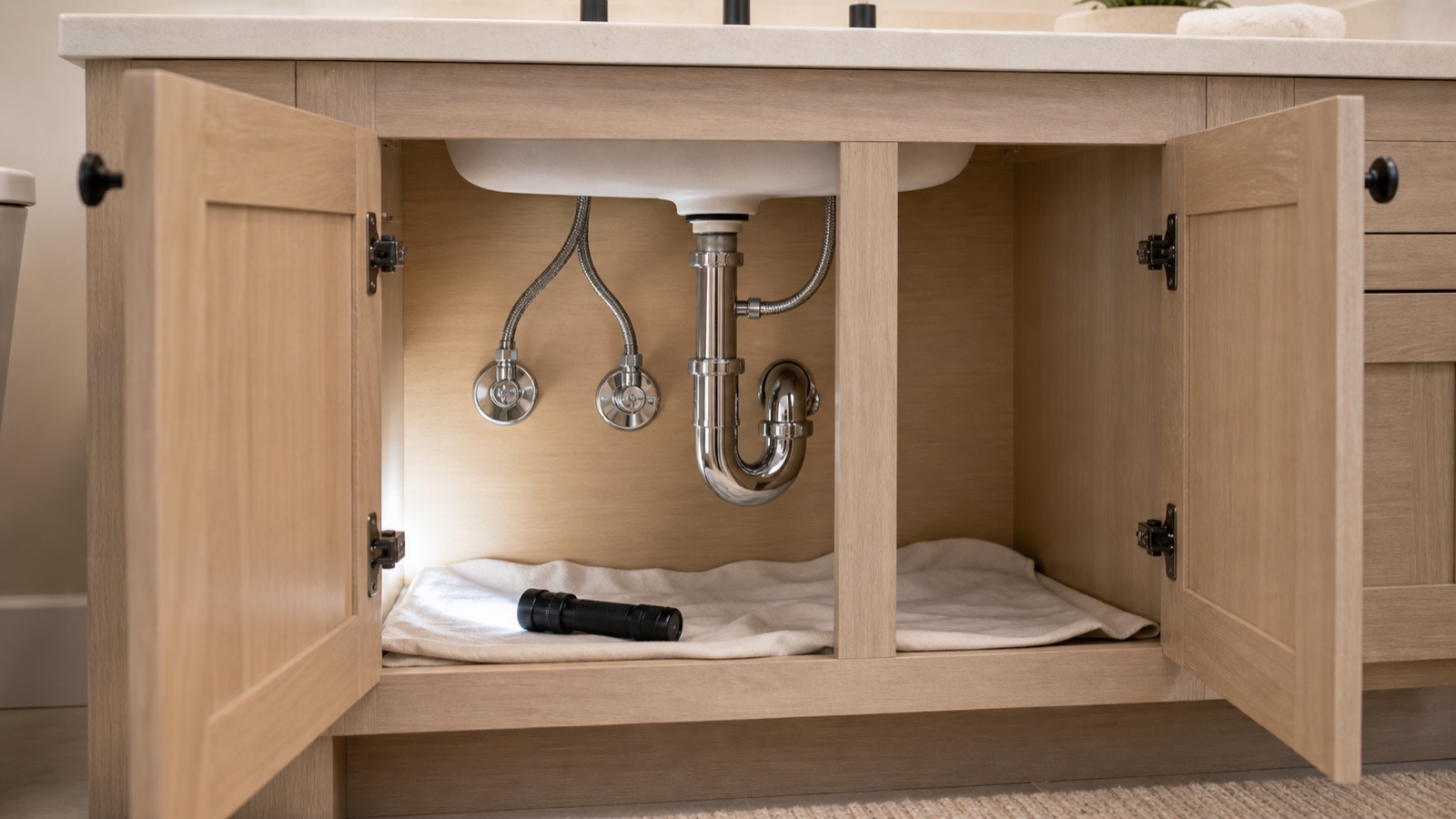
Old angle stops, stiff handles, corroded valves, and tired supply lines can turn a simple fixture change into a future service problem. A remodel is a practical time to check them because the room is already being opened and coordinated.
What to look for
- Shutoffs that do not fully close.
- Visible corrosion, mineral buildup, or staining.
- Loose supply connections under the sink or toilet.
- Old braided supplies, worn gaskets, or questionable seals.
Replacing serviceable parts during the remodel can make future maintenance simpler and reduce avoidable risk around new cabinets, flooring, and tile.
Fixture compatibility matters more than style
Fixtures should be selected for fit and serviceability, not only appearance. Faucets, toilets, tubs, shower valves, hand showers, and drain assemblies all have rough-in requirements.
- A vanity faucet needs the right hole count and spacing.
- A toilet needs the right rough-in distance and flange condition.
- A shower valve needs proper depth before wall finishes are installed.
- A tub or shower drain needs alignment and access for reliable connections.
Before buying fixtures, share model numbers or spec sheets with the contractor. It is better to catch a compatibility issue during planning than after the box is opened on site.
Drains, traps, and venting need attention
Slow drains, odors, gurgling, or loose connections are not just annoyances during a remodel. They may point to trap alignment, slope, venting, or old fittings that should be reviewed while the room is accessible.
A remodel estimate should clarify whether drain work is included and what will be visible or accessible during the project. If walls or floors are opened, that is the best time to inspect what is practical without unnecessary damage.
Coordinate plumbing with tile, flooring, and vanity work
Bathroom work is a sequence. Plumbing rough-in must line up with tile thickness, wallboard, vanity dimensions, countertop height, shower glass, flooring height, and finish trim.
- Flooring height can affect toilet flange planning.
- Wall tile thickness can affect shower valve trim depth.
- Vanity drawers can conflict with drain and supply locations.
- Shower niches and shelves can conflict with plumbing routes.
This is why plumbing should not be treated as a separate afterthought when the project includes tile work, flooring, or a full bathroom layout change.
Test before surfaces are closed
Testing is one of the most important remodel steps. Supply and drain connections should be checked before finish work hides them, and fixtures should be operated before the project is considered complete.
- Operate shutoffs and confirm they close.
- Run water and watch visible supply connections.
- Check drain assemblies, traps, overflows, and seals.
- Verify shower valve function and temperature control.
- Review what the homeowner should monitor after handoff.
Testing does not make a project dramatic. It makes it professional.
When to request a plumbing-only visit
Not every issue requires a full remodel. Water under a vanity, a dripping faucet, old shutoffs, a running toilet, a loose trap, or a slow localized drain may be handled as focused plumbing work.
If the room also needs tile, ventilation, vanity, or flooring updates, then a broader bathroom remodeling scope may be more efficient because trades and finishes can be coordinated together.
What to bring to the estimate
Before requesting a quote, gather photos of the bathroom, visible plumbing, the fixture models you like, and any symptoms you have noticed. Clear details help the estimate separate repair work, replacement work, and remodel coordination.
When Get Renovation reviews a bathroom scope, plumbing is checked alongside waterproofing, tile, ventilation, access, and finish planning so the visible result is supported by the work behind it.
Ready to Transform Your Bathroom?
Get a free estimate from our experts in the Seattle area.
Get a Free Quote Contact Us